
Dental Implants
Restore Missing Teeth with a Natural-Looking Solution
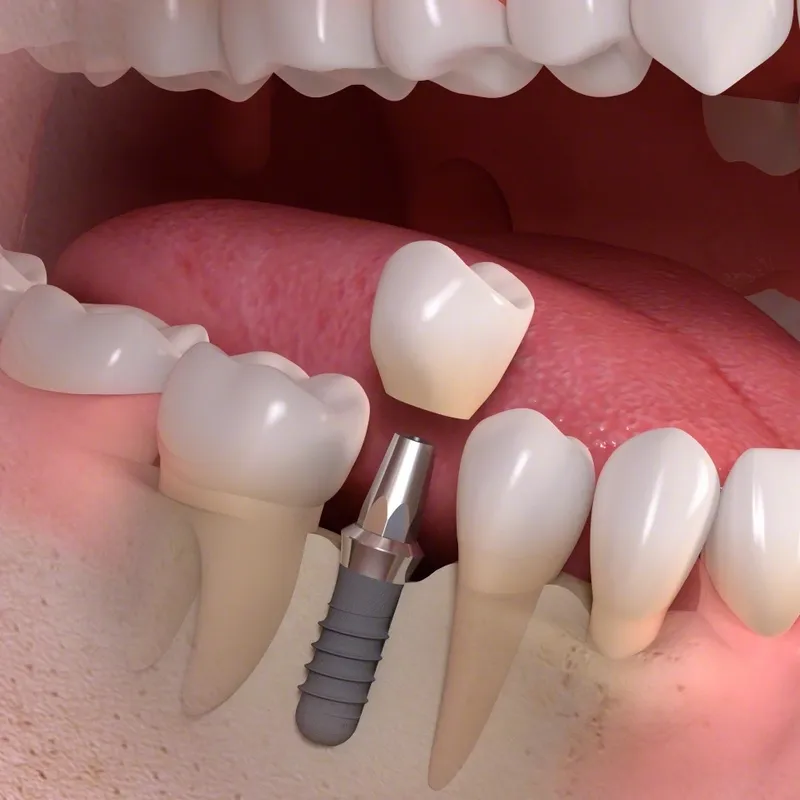
Dental implants are an advanced solution for replacing missing teeth. Technically, an implant is an artificial tooth root placed into your jawbone, which supports a prosthetic tooth, bridge, or denture. Combined, the implant and prosthetic tooth restore function, appearance, and confidence.
Dental implants are ideal for patients who have lost teeth due to periodontal disease, injury, or other reasons, and prefer a long-lasting alternative to dentures.
Types of Dental Implants
-
Endosteal (In-the-Bone)
-
The most common type of implant, placed directly into the jawbone.
-
Can include screws, cylinders, or blades to hold one or more prosthetic teeth.
-
Suitable for patients currently wearing bridges or removable dentures.
-
-
Subperiosteal (On-the-Bone)
-
Placed on top of the jawbone with posts protruding through the gums to support the prosthetic.
-
Often used for patients unable to wear conventional dentures or lacking sufficient bone height for endosteal implants.
-
Are You a Candidate for Dental Implants?
You may be an ideal candidate if you:
-
Are in good general and oral health
-
Have adequate jawbone to support the implant
-
Have healthy gum tissues free from periodontal disease
Dental implants rely on healthy soft tissues (gums) and hard tissues (bone). Periodontists, with specialized training beyond dental school, are experts in both areas and ensure implants look, feel, and function like natural teeth.
Dental Implant Procedures
Depending on your needs, your periodontist may recommend:
-
Single Tooth Implant: Replaces one missing tooth.
-
Multiple Tooth Implants: Replaces several missing teeth.
-
Full Mouth Implants: Replaces all teeth in the mouth.
-
Sinus Augmentation: Raises the sinus floor and develops bone for upper back jaw implants.
-
Ridge Modification: Corrects jaw deformities by adding bone to improve implant stability and jaw appearance.
The Dental Implant Process
-
Evaluation and Planning: Your dentist develops a personalized treatment plan based on your oral health and desired outcome.
-
Implant Placement: The artificial tooth root is surgically inserted into your jawbone.
-
Healing and Integration: The implant fuses with the bone to provide a stable foundation.
-
Prosthetic Placement: A crown, bridge, or denture is attached to the implant for a natural look and function.
Caring for Your Dental Implants
Dental implants require the same care as natural teeth:
-
Daily brushing and flossing to remove plaque
-
Regular dental visits for monitoring implant health
-
Periodic follow-ups with your dentist and periodontist to ensure the gums, bone, and implants remain healthy
With proper care, dental implants can last for many years, restoring both your smile and oral function.